The Context
Boston Scientific’s clinical specialists are some of the sharpest people in any room. Biomedical engineers. Product experts. The ones standing beside surgeons in the operating theatre, guiding them through life-saving procedures with pacemakers, stents, and cutting-edge cardiac technology.
Technically, they were world-class. Relationally, they faced challenges.
The division was growing fast: a 50% increase in clinical headcount, with the majority of new hires coming straight from university. Brilliant graduates, deeply trained in the sciences, but dropped into high-stakes environments where they were expected to earn the trust of physicians, handle objections, and navigate complex interpersonal dynamics: often within weeks of starting.
How do you challenge a senior cardiologist…respectfully?
How do you read the room when a procedure isn’t going to plan?
How do you shift from technical support to trusted advisor?
That’s where we came in.
What We Did
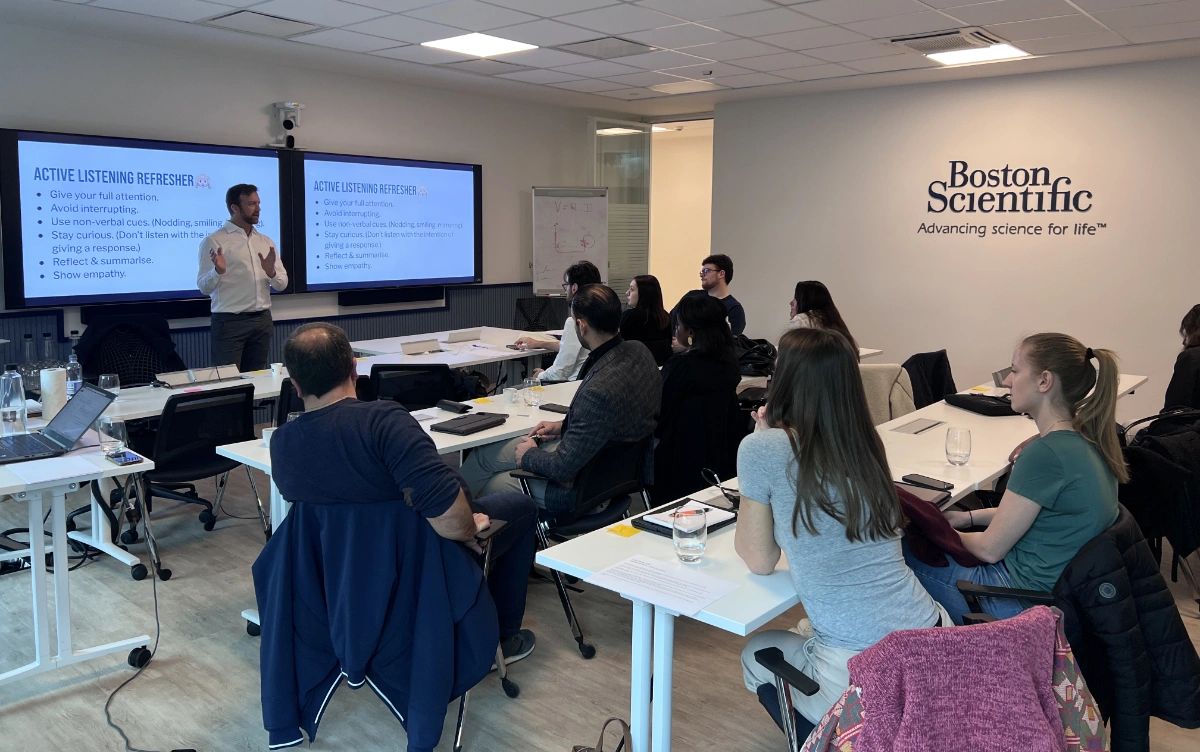
We designed and delivered a rolling programme of half-day coaching workshops, integrated into Boston Scientific’s existing clinical training curriculum across Europe. Rather than bolting on a standalone “communication skills” module, we embedded the work directly into their technical foundations programme, so it became part of the job, not an afterthought.
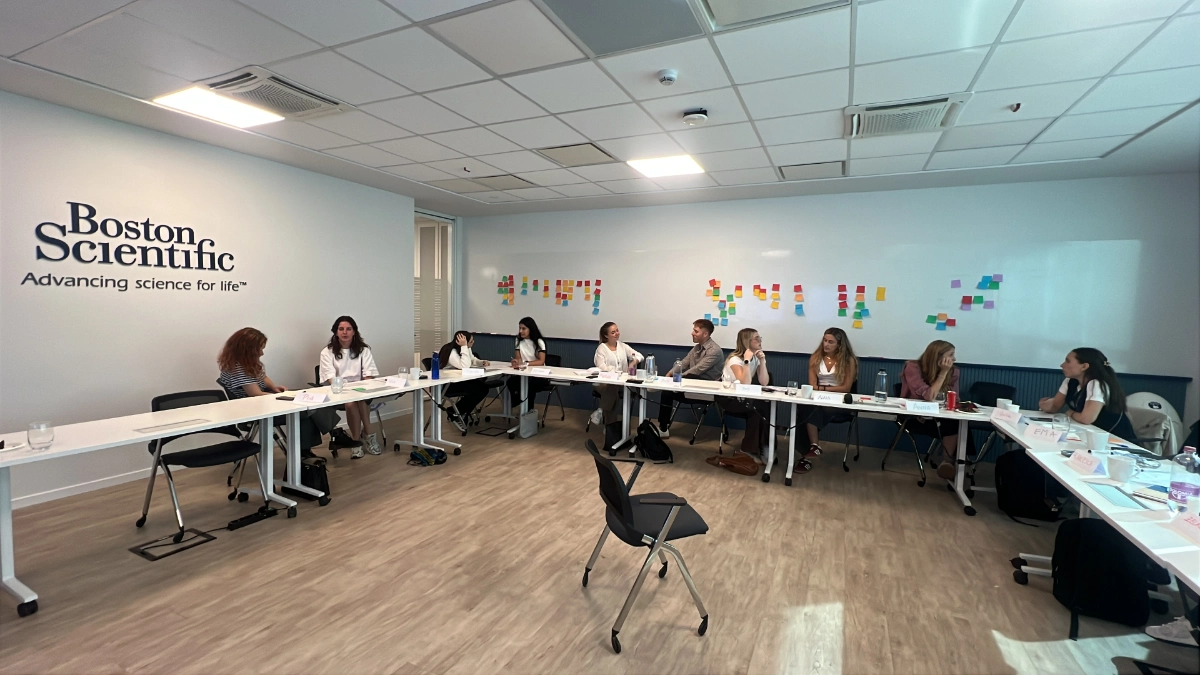
Over 18 cohorts and 12+ sessions between May 2025 and March 2026, we worked with clinical specialists from across Europe, bringing together clinical specialists from Italy, Prague, Germany, Portugal and many more.
Each workshop was built around three core threads:
- Personality insights and communication styles: using the Insights colour-based framework to help participants understand their own patterns, and recognise how physicians and colleagues operate differently.
- Real-case role-plays: drawn from actual field scenarios, including objection handling, physician coaching, and navigating difficult conversations in theatre.
- Self-awareness and relational intelligence: exploring how to listen more actively, adapt communication in the moment, and build trust with clinicians faster.
The sessions were deliberately interactive. No lectures. No death-by-slide. Participants worked in small groups, practised with each other, and reflected on their own style in a space that was open, non-judgemental, and energising.
Every session was tailored to the realities of the role: the power dynamics of the operating room, the pressure of being the newest person in a high-stakes clinical environment, and the subtle commercial awareness that comes with being part of a wider business.
What changed?
Participants were able to translate interpersonal skills into tangible, practical tools they could use in the flow of work. They felt more confident, clear and had tools to face high-pressure situations with effective strategies.
“Very interactive. Offered a new perspective on how to manage different characters and difficult situations.”
Christoforos Akridas
“Now I will feel more confident at the OR!!”
Elsa Barrutieta Vidaurreta
“I think these sessions are very beneficial and I would encourage them to be had more and be allocated even more time.”